
Designing a small bathroom in New York City doesn’t mean sacrificing comfort or style. With tight floor plans, older buildings, and strict plumbing constraints, smart layout decisions matter more than ever. The right approach can make even a compact Manhattan bathroom feel open, functional, and thoughtfully designed.
Below are the most effective small bathroom layout ideas, with practical guidance on how each one helps maximize space.
One-Wall Bathroom Layout
A one-wall layout places the sink, toilet, and shower or tub along a single wall. This layout works especially well in narrow bathrooms or powder rooms.
Keeping plumbing on one wall reduces visual clutter and frees up floor space. To maximize space, use a wall-mounted vanity, a compact toilet, and a walk-in shower with clear glass. Vertical storage, such as recessed shelves or tall cabinets, helps keep essentials accessible without crowding the room.
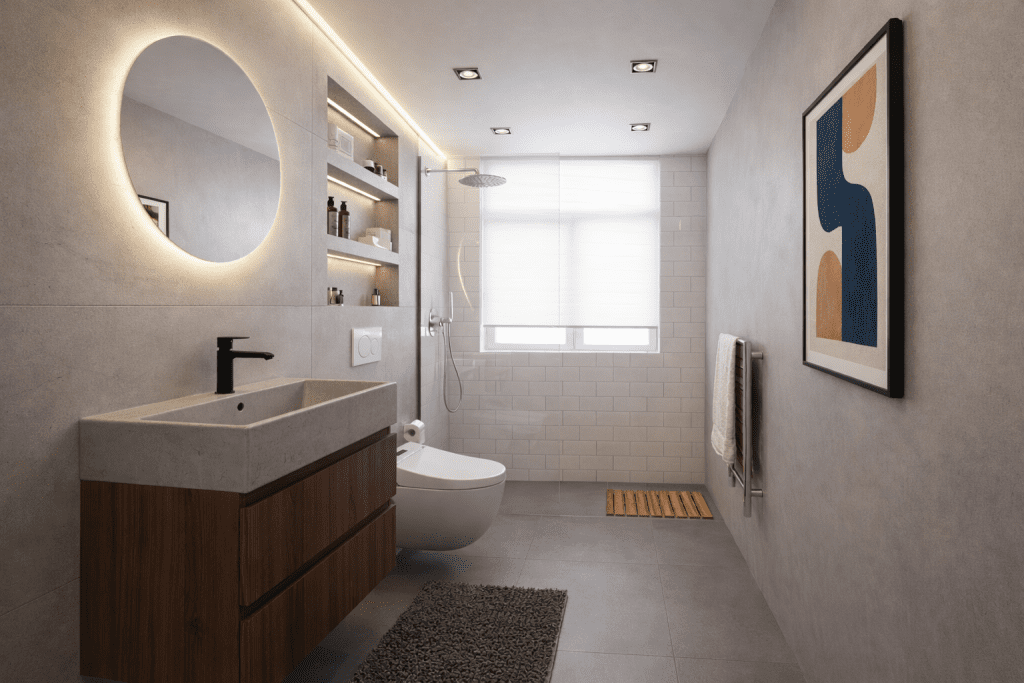
Corner and Walk-In Shower Layout
Replacing a traditional tub with a corner or walk-in shower is one of the most effective ways to open up a small bathroom in Manhattan. Corner showers take advantage of underused space and improve traffic flow, while walk-in or curbless designs remove visual barriers and create a seamless transition across the room.
Frameless glass enclosures, single glass panels, and continuous flooring help maintain open sightlines and make the space feel larger. Large-format tiles enhance the sense of scale, and built-in niches eliminate the need for bulky shelving.

Tub-Shower Combination Layout
A tub-shower combo is a smart solution when space is limited but functionality is essential.
Positioning the tub along the longest wall maximizes efficiency. Sliding glass doors or a clear shower screen prevent the space from feeling boxed in. Built-in storage above or beside the tub can replace freestanding shelves and keep the layout streamlined.
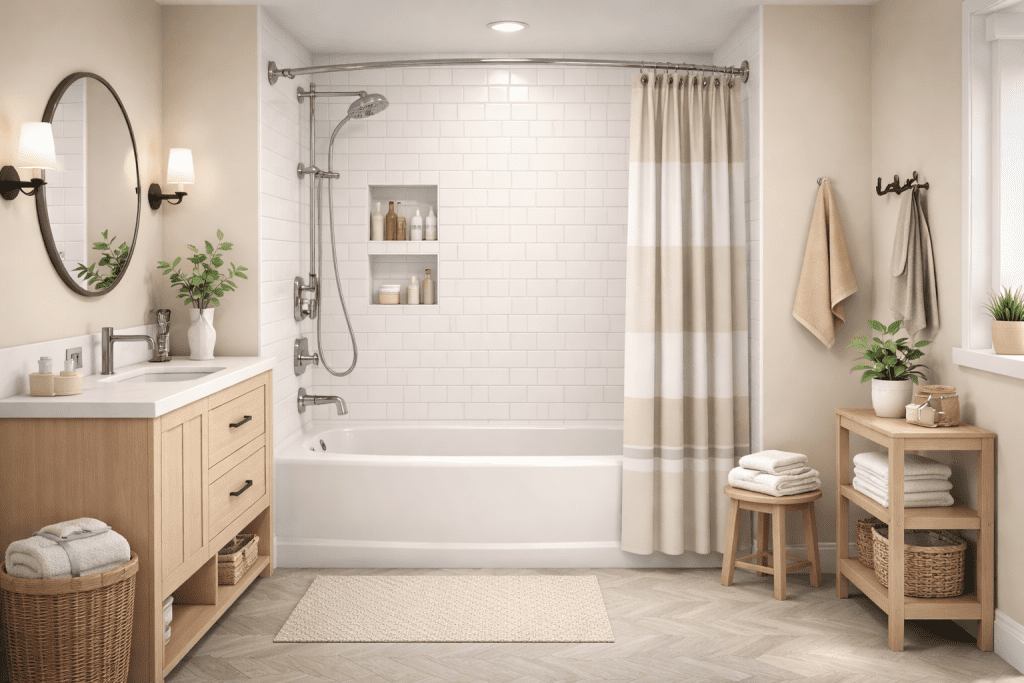
Floating Vanity Layout
A floating vanity creates the illusion of more floor space while offering practical storage.
By lifting the vanity off the floor, the bathroom feels less crowded and easier to clean. Choose drawers instead of cabinets for better organization, and pair the vanity with a wall-mounted faucet to save counter space. Adding lighting underneath the vanity enhances the sense of openness.
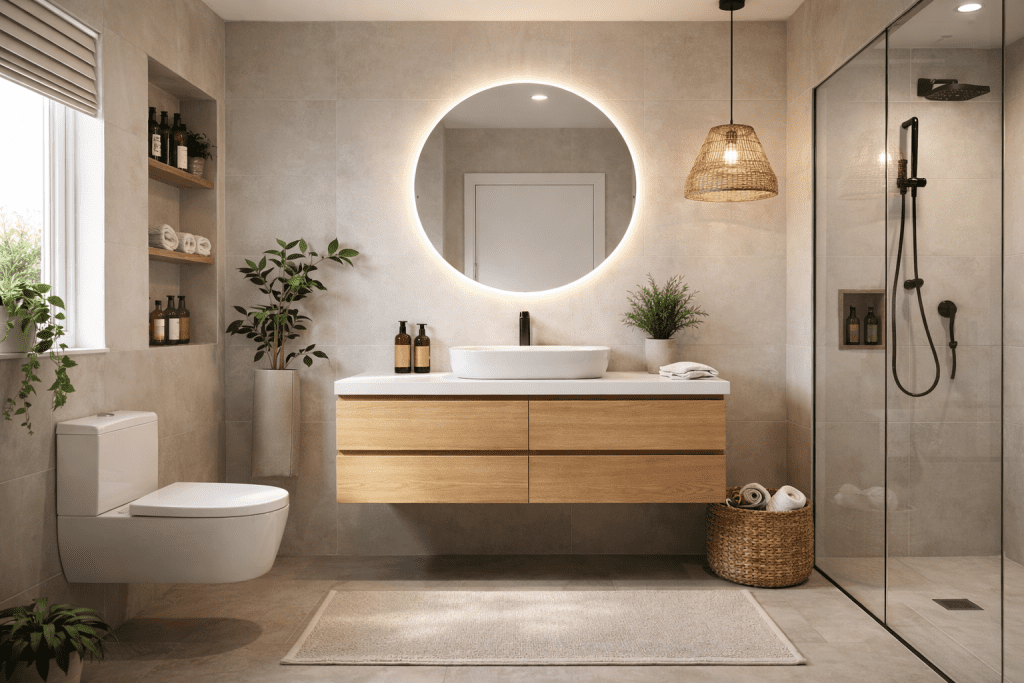
Wall-Mounted Toilet Layout
Wall-mounted toilets are ideal for compact bathrooms where every inch matters.
With the tank hidden inside the wall, this layout frees up valuable floor area and simplifies cleaning. The reduced footprint allows more flexibility for vanity size or shower placement, making the bathroom feel more spacious and modern.

Galley-Style Bathroom Layout
A galley layout places fixtures along opposite walls, creating a central walkway.
This works well in long, narrow bathrooms. Keeping fixtures aligned and evenly spaced prevents the room from feeling cramped. Use shallow-depth vanities and mirrored surfaces to reflect light and widen the visual footprint of the space.
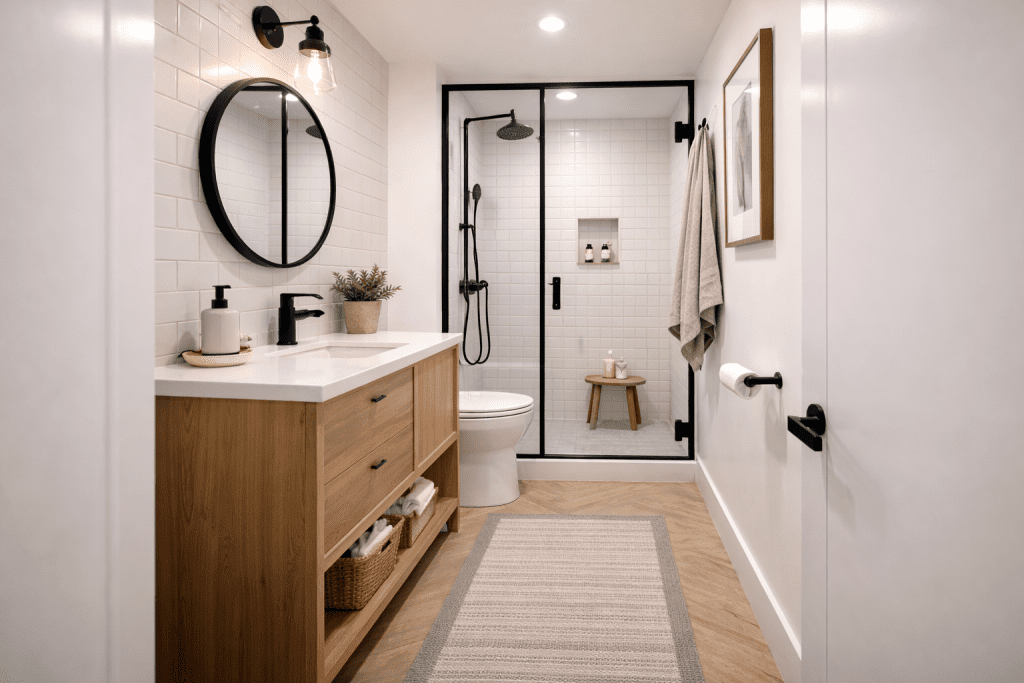
Wet Room Layout
A wet room combines the shower area with the rest of the bathroom floor.
This layout removes physical barriers and maximizes usable space. Waterproofing the entire room allows for flexible fixture placement and easy maintenance, while proper floor slope, sealed membranes, and professional installation help prevent water damage and moisture issues. Minimal glass panels and consistent flooring create a seamless, open feel that works especially well in very small bathrooms.
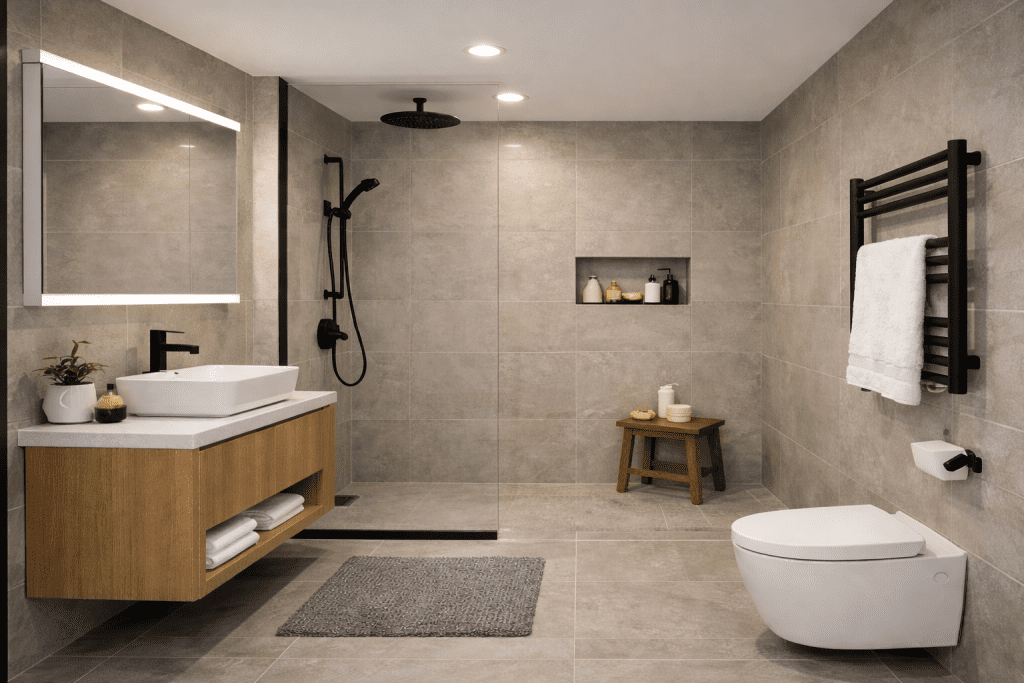
Powder Room Layout Optimization
Even the smallest bathrooms can benefit from smart layout planning.
In powder rooms, prioritize a compact sink and a slim-profile toilet. Wall-mounted sinks or corner basins free up legroom, while a large mirror enhances depth. Simple, uncluttered design choices make the space feel intentional rather than tight.
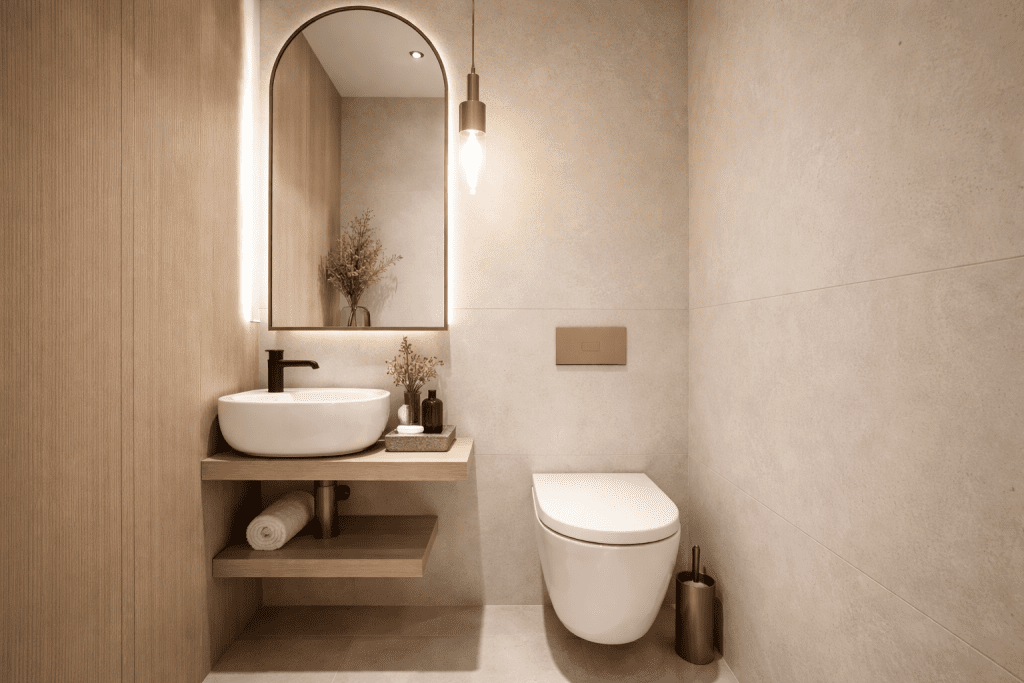
Smart Storage Layout Solutions
Storage placement plays a major role in how spacious a small bathroom feels.
Recessed medicine cabinets, built-in niches, and floor-to-ceiling shelving maximize storage without reducing floor space. Keeping storage integrated into the layout prevents overcrowding and maintains clean lines throughout the bathroom.
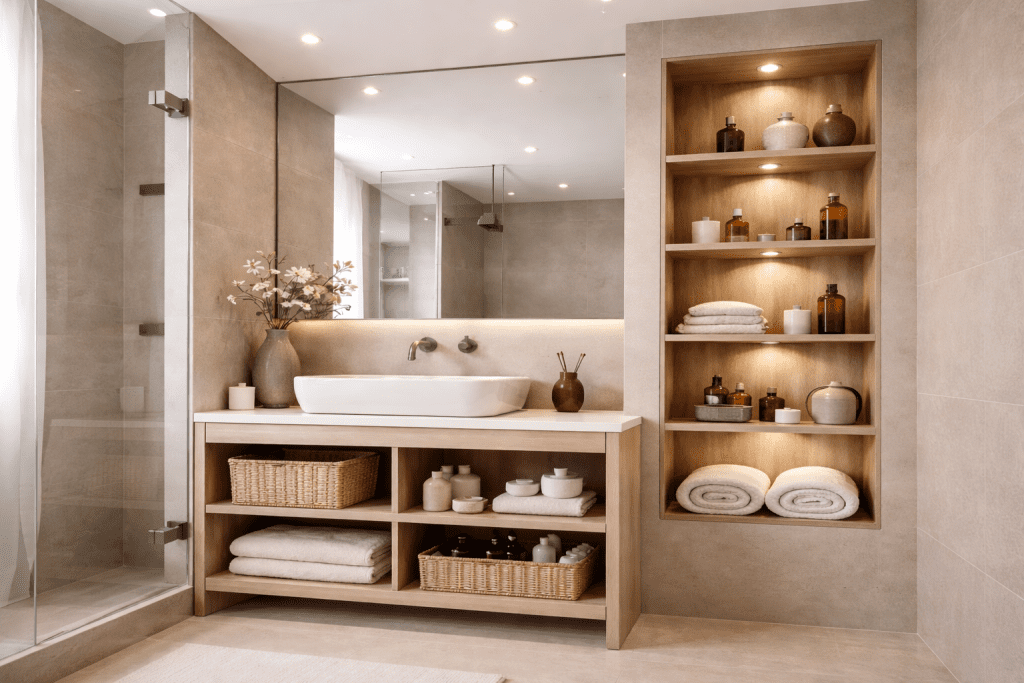
To Summarize:
Designing a small bathroom in New York City requires careful planning and smart layout decisions. With limited square footage, older building conditions, and plumbing constraints, the right layout can significantly improve both functionality and comfort. Thoughtful design choices help compact bathrooms feel more open, efficient, and visually balanced.
Key small bathroom layout ideas covered in this guide include:
- One-wall bathroom layouts that keep plumbing efficient and reduce visual clutter
- Corner and walk-in shower layouts that open up floor space and improve movement
- Tub-shower combination layouts that balance functionality and space efficiency
- Floating vanity layouts that create the illusion of more floor space and improve storage
- Wall-mounted toilet layouts that reduce fixture footprint and simplify cleaning
- Galley-style bathroom layouts that improve flow in long, narrow spaces
- Wet room layouts that maximize usable space with seamless, barrier-free design
- Powder room layout strategies that make even the smallest bathrooms feel intentional
- Smart storage solutions that use vertical and recessed space without crowding the room
When these layout strategies are combined with space-saving fixtures, clear sightlines, and integrated storage, small bathrooms can feel both practical and well designed. With the right approach, even a compact NYC bathroom can be transformed into a space that feels comfortable, functional, and built to last.
If you’re considering an NYC bathroom renovation, NYTDR is here to help. We work closely with you to design a layout that fits your space, your needs, and your style, then handle the entire renovation process with care and attention to detail. The result is a bathroom that feels thoughtfully designed and built to last.
Ready to start your bathroom dream? Contact NYTDR today to schedule a free consultation!