
Picture a homeowner in a Brooklyn brownstone who’s spent over a year scrubbing the same dark ring off her shower curtain and tile, only to watch it come back a little faster each time.
The cause was never dramatic. Showers with the door closed and the fan off. A damp bath mat left folded on the tile. The curtain bunched shut instead of spreading open to air out. None of it looked like a problem on its own, but together it meant the bathroom never fully dried out, and mold doesn’t need a leak to take hold, just consistent dampness and time.
This kind of scenario is just as common as the structural causes people usually picture, and it’s worth understanding both, especially in New York apartments, which behave very differently from the houses most mold advice is written for.
Quick gut check: if you have cleaned visible mold in the same spot more than twice, the moisture source has not been fixed, only the mold has been removed. That distinction matters more than any cleaning product.
Why NYC Bathrooms Are a Different Problem
Most mold prevention content assumes a house with an attic, a crawl space, and a window in every room. New York apartments rarely have any of those things, and that changes the whole equation.
Interior, windowless bathrooms rely entirely on mechanical exhaust to remove humidity. There is no cross breeze to fall back on. If that fan is underpowered, poorly maintained, or vented into a wall cavity instead of outside, which we find more often than you would expect during renovations, moisture has nowhere to go but into the surrounding plaster, tile, and grout.
Shared plumbing stacks in co-ops and condos mean a slow leak is not always yours to find. Moisture can travel along a pipe chase from the unit above or below and show up as a stain or musty smell with no visible source in your own walls.
Radiator heat dries the air unevenly. A bathroom can feel bone dry near the radiator and stay damp in the corner behind the tub for hours after a shower, which is exactly where we find growth starting.
Board and co-op approval timelines mean minor leaks often sit unaddressed for weeks or months while paperwork moves, giving moisture far more time to do damage than it would in a house where a homeowner can call a plumber the same day.
None of this is meant to be alarming. It is just the actual operating environment, and prevention advice that ignores it is not very useful to you.
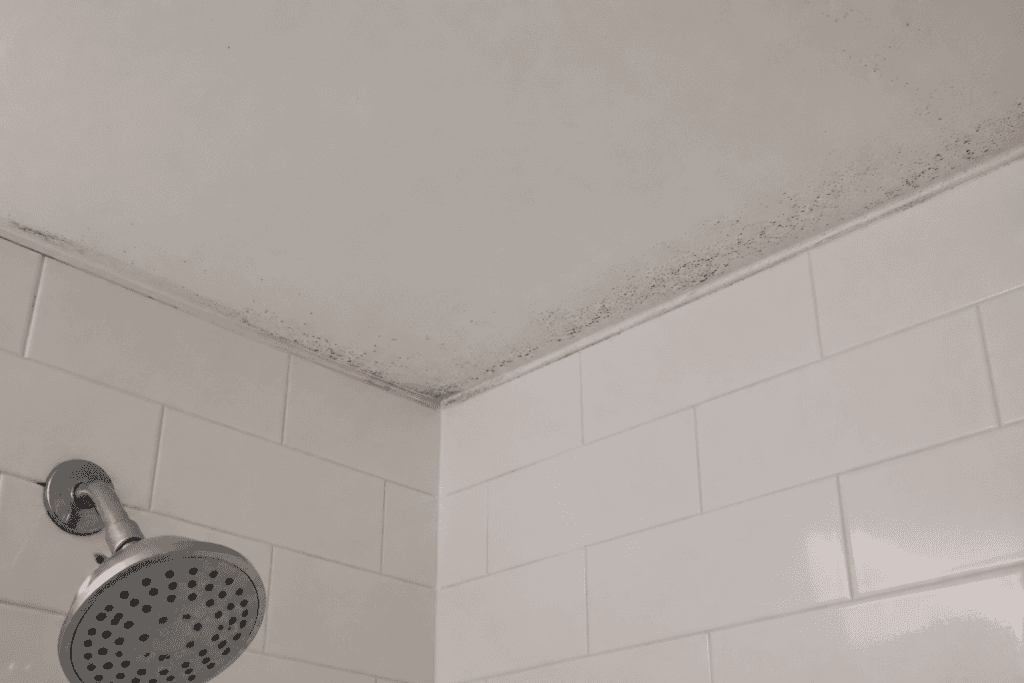
What Causes Mold in a Bathroom
Mold needs three things to establish itself: moisture, a food source such as soap film, dust, or drywall paper, and time without disruption. In a bathroom, the moisture is almost never the obvious splash you can see. It comes from a small number of specific, mostly hidden places.
Cracked grout or caulk where the tub meets the tile. This is the single most common failure point we see. Grout is porous by design; it is only water resistant when properly sealed, not waterproof on its own. Once a hairline crack opens at the tub to tile joint, which is completely normal after a year or two of a building settling and temperature cycling, water gets behind the tile with every shower and never fully dries between uses.
A failing wax ring or flange under the toilet. A toilet that rocks even slightly, a faint but persistent odor near the base, or discoloration at the floor are the tells. This is a slow, low volume leak, not dramatic enough to notice quickly, but constant enough to saturate subfloor and drywall over months.
An exhaust fan that runs but does not actually vent outside. A fan that is loud and moves air does not guarantee it is venting anywhere useful. In older buildings, we regularly find fans that dead end into a wall cavity, an attic space, or a capped duct left over from a previous renovation. If your mirror is still fogged ten or more minutes after a hot shower with the fan running, that is the tell. The fan is circulating humid air, not removing it.
An aging shower pan membrane, in bathrooms with tiled rather than prefab shower floors. These fail quietly under the tile, and by the time you see a stain on the ceiling of the room below, the leak has usually been active for a while.
Condensation on window sills and frames, in bathrooms that do have an exterior window. Water collects in the frame track and sits there because nobody wipes down a windowsill they cannot easily reach over a tub.
General excess humidity that never fully clears, especially in windowless bathrooms that depend entirely on mechanical ventilation and where that ventilation is undersized or poorly maintained.

To summarize,
Cause | Early Sign to Watch For |
Cracked grout or caulk at the tub seam | Faint musty smell before any visible mold |
Failing toilet wax ring | Toilet rocks slightly, faint odor near base |
Exhaust fan not venting outside | Mirror stays fogged well after fan runs |
Aging shower pan membrane | Ceiling stain in the room below |
Window frame condensation | Water pooling in the frame track |
Undersized or poor ventilation overall | Bathroom feels humid long after a shower |
How to Prevent Mold in Your Bathroom
Once you know where moisture actually comes from, prevention stops being guesswork. These are the habits and checks that close off each cause above, roughly in order of how much impact they have.
Squeegee or towel dry the tub walls and window sill after every shower. This single habit removes most of the standing moisture before it ever becomes humidity sitting in the room. It takes ten seconds and is the highest value habit on this list because it addresses the water before it becomes a lingering problem.
Check the tub to tile seam once a month. Run a finger along it. If you feel any give or see a gap forming, reseal it that week with a silicone bathroom caulk, not an acrylic one. It is roughly a twenty minute job and it closes the door on months of hidden saturation behind the tile.
Address a rocking toilet immediately, and do not just tighten the bolts. A rock usually means the wax seal underneath is already compromised. Tightening a toilet that is sitting on a broken seal stresses it further rather than fixing anything. Have the seal checked as soon as you notice the movement.
Test your exhaust fan properly, not just by listening to it. Hold a single ply tissue near the grille while the fan runs. If it does not cling and pull toward the vent, you do not have real suction, and the fan is not actually removing moisture no matter how loud it sounds. That points to a duct problem, not a fan problem, and it needs a technician to trace where the duct actually goes.
Run the fan for twenty to thirty minutes after a shower, not only during it. Humidity in a small, enclosed bathroom does not drop the moment the water shuts off. It plateaus and clears slowly, and most of the moisture absorption into grout, drywall, and paint happens during that lingering window rather than during the shower itself.
Reseal grout on a schedule, every six to twelve months in a bathroom used daily. Sealant wears down from regular water exposure and cleaning chemicals even when nothing looks visibly wrong. Putting it on a calendar is the only reliable way it actually gets done.
Wipe the window sill track after a shower, the same way you wipe the tub. It is a small habit, but condensation left sitting in a frame track for weeks is a genuine, avoidable contributor.
At renovation time, make material choices that prevent the problem long term. Use cement board instead of drywall behind tile in wet areas, confirm the exhaust fan is properly sized in CFM for the room’s actual volume rather than whatever fits the budget, and check the age of any tiled shower pan membrane before it fails on its own timeline. “Mold resistant” paint is worth knowing the limits of here too: it slows surface growth on the paint film itself, but does nothing for moisture that is already getting into the wall behind it. This is also where having someone experienced in the room matters.
Our team at NYTDR guides clients through these decisions during a renovation, from the board behind the tile to the fan above the shower, and installs the materials built to actually hold up in a wet, high use bathroom rather than the ones that just meet code on paper.
Do these consistently and you remove almost every pathway mold actually uses to get started. Most jobs we get called in for did not come from anything dramatic. They came from one of these small things going unchecked for a year or more.
When Cleaning Is Not Enough
A thin surface film on grout or caulk that wipes away with water and vinegar and does not return within a few weeks was probably never more than surface mildew, and that is genuinely minor. But that is a narrower category than most people assume.
The moment mold returns in the same spot, shows up with a musty smell but no visible source, or covers more than roughly a dinner plate sized area, cleaning is no longer solving anything. It is resetting a timer. What is growing on the surface is downstream of moisture that is already inside the wall, the subfloor, or a cavity you cannot see or reach with a spray bottle.
Where Insurance Fits In
This surprises a lot of people. Not all mold is treated the same way by insurance, and the difference usually comes down to whether the source was sudden or gradual.
A pipe that bursts and causes mold within days is typically the kind of sudden, accidental water damage that is covered under a standard homeowners or co-op policy. A slow leak that went unnoticed or unaddressed for months, like a failed wax ring or a cracked grout seam, is much more likely to be treated as a maintenance issue, which insurers often exclude.
The practical takeaway: the moment you notice a leak, a stain, or a musty smell, document it with photos, a date, and a note of what you observed, even before you know whether it is serious. That timestamp can be the difference between a claim that is approved and one that is denied as a known, pre-existing condition.
Learn how NYTDR manages the insurance claims process for you
Frequently Asked Questions
How do I stop mold from coming back after I clean it? If mold returns in the same location after cleaning, the moisture source itself has not been addressed, only the visible growth was removed. Find and fix the underlying source, most commonly a failed grout or caulk seam, a slow toilet leak, or a fan that is not properly venting, rather than repeating the cleaning.
Can mold grow behind tile even if I never see it? Yes, and this is one of the more common patterns we see. A cracked grout or caulk seam lets water behind the tile with normal use, where it can sit against drywall or an aging shower pan membrane for months before any staining or smell becomes noticeable on the visible surface.
Does my landlord have to fix bathroom mold in NYC? Under NYC’s Local Law 55, owners of buildings with three or more units are required to proactively inspect for and remediate mold, including addressing the underlying moisture cause, not just cleaning the surface. Mold covering more than ten square feet in larger buildings requires a state licensed mold assessor and a separately licensed remediation contractor.
When It Is Time to Bring Someone In
If you are dealing with mold that keeps returning, a musty smell without a visible source, water damage from a leak or flood, or you are simply not sure whether what you are looking at is surface level or structural, that is the point where a professional assessment is worth more than another round of cleaning. NYTDR handles mold assessment and remediation, water damage restoration, and, when a leak has caused real damage, the insurance claims process and rebuild, all under one roof.
Get a Free Consultation or call 212.206.1300