NYC Snowstorm Damage: A Homeowner’s Guide to Professional Restoration

When severe winter weather damages your home, fast and reliable restoration matters.

After the latest blizzard, many NYC homeowners wake up to a familiar sight: snow-covered roofs, icy walkways, and the nagging fear of hidden damage. Knowing who to call for professional restoration can make the difference between a small repair and a costly disaster.

Our team has worked with NYC homeowners through countless snowstorms, and have seen what snow damage really looks like — and where proper restoration needs to begin.

Preparing for Snow Damage: Restoration Starts Here

A Conversation Between Moshe Amos and an NYC Homeowner
Grey Man Figure Outline
Homeowner

Moshe, after this last snowstorm, I’m honestly worried. Everything looks fine from the outside, but I keep hearing that snow damage doesn’t always show up right away. Is that true?

Moshe Amos

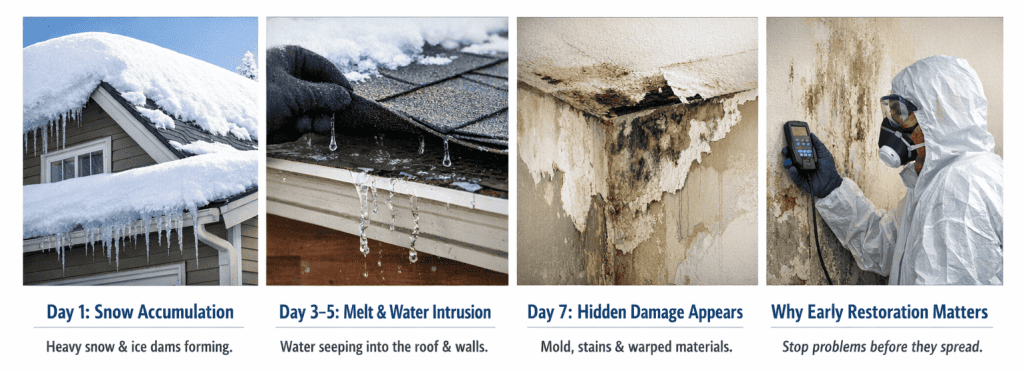
It’s very true. A snowstorm doesn’t end when the snow stops falling. The real damage often starts when snow begins to melt. Water can seep into roofs, walls, windows, and foundations without immediate signs. What looks harmless on day one can turn into serious interior or structural damage within a week.

Grey Man Figure Outline
Homeowner

So what kind of damage are you seeing most right now across NYC?

Moshe Amos

We’re seeing a lot of water damage from snowmelt, hidden moisture behind walls, ceiling leaks, and basement seepage. In many cases, that moisture leads to mold if it’s not addressed properly. That’s why restoration isn’t just about drying — it’s about fully restoring the home and preventing long-term issues.

Grey Man Figure Outline
Homeowner

Does the risk depend on where you live in the city?

Moshe Amos

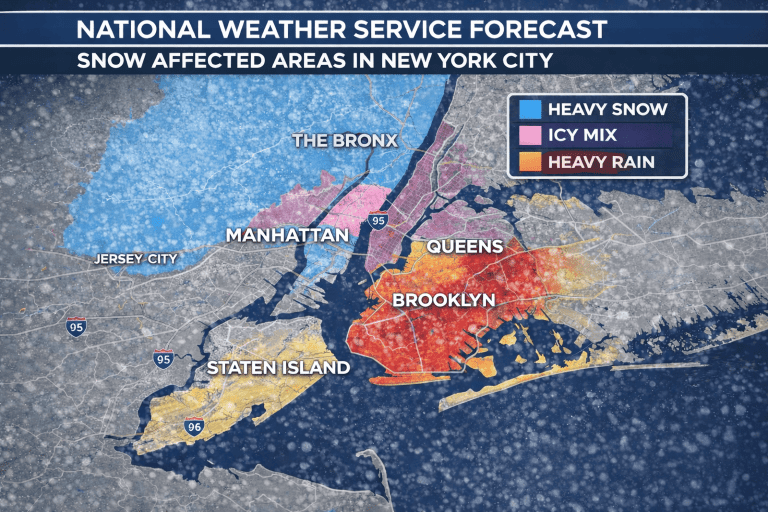
Very much so. Different parts of NYC experience snow damage differently.

For example, in Upper Manhattan — places like Washington Heights, Inwood, and Harlem — higher elevation and older apartment buildings mean heavier snow loads. Flat roofs in these areas are especially vulnerable to ice dams and water backing up under roofing membranes.

In the Bronx, neighborhoods like Riverdale, Pelham Parkway, Kingsbridge, and Mott Haven often have pre-war or mid-century buildings. Aging roofs and drainage systems lead to ceiling leaks, wall moisture, and insulation damage once the snow melts.

Queens is a mix. In Astoria, Forest Hills, Flushing, and Bayside, we see pitched roofs and gutters clogging with ice. That causes soffit leaks, window intrusion, and attic moisture.

Brooklyn neighborhoods like Park Slope, Bedford-Stuyvesant, Williamsburg, and Crown Heights are full of brownstones and row homes with shared walls. Snowmelt often travels laterally between buildings, so leaks and stains can appear days after the storm — sometimes in a neighboring home.

And Staten Island, especially Tottenville, Great Kills, and New Dorp, typically gets heavier snowfall than the rest of the city. Detached homes there face structural stress, gutter failures, and basement water intrusion.

Here’s a clear visual breakdown showing which areas are affected.

Grey Man Figure Outline
Homeowner

That’s a lot more complex than I realized. Are there certain homes that are at higher risk overall?

Moshe Amos

Yes. Properties with flat or low-slope roofs, older buildings built before the 1970s, homes with poor drainage or clogged scuppers, and properties near the coast or exposed to strong winds all face higher risk during extreme snowstorms.

Grey Man Figure Outline
Homeowner

Why does snow damage seem to show up days later?

Moshe Amos

Because it happens in stages. Snow builds up, then it melts, then water gets trapped where you can’t see it. By the time signs appear, the damage has already progressed. The timeline below shows how that process can unfold in less than a week.

Snow Damage Timeline
Grey Man Figure Outline
Homeowner

If someone suspects damage, what should they do first?

Moshe Amos

The first step is not guessing — it’s getting clarity. We offer free consultations so homeowners can understand what’s actually happening in their home. Many people are relieved to find the damage is manageable, but catching it early is critical.

Grey Man Figure Outline
Homeowner

And if damage is found, what does NYTDR actually handle?

Moshe Amos

We handle the full restoration process. That includes water damage restoration, mold remediation when moisture has been sitting too long, and complete NYC renovation of affected areas once drying is done. Homeowners don’t need to juggle multiple contractors — we take care of everything from assessment to final repairs.

Grey Man Figure Outline
Homeowner

Mold is something that really worries people. Is that common after snowstorms?

Moshe Amos

It’s very common when moisture goes unnoticed. Mold doesn’t come from the snow itself — it comes from trapped moisture after the melt. That’s why proper drying and remediation are essential parts of restoration, not optional add-ons.

Grey Man Figure Outline
Homeowner

How does insurance factor into all of this?

Moshe Amos

Insurance can be overwhelming, especially after storm damage. We work directly with insurance companies to document damage properly and help maximize valid claims. When restoration and insurance coordination are done together, homeowners are protected from delays and underpayments.

Grey Man Figure Outline
Homeowner

What would you say to a homeowner who’s unsure whether the damage is serious?

Moshe Amos

What you don’t see can cost you the most. Snow damage is often hidden at first, but it doesn’t stay small. A free consultation can prevent long-term damage, mold growth, and expensive structural repairs later on.

Grey Man Figure Outline
Homeowner

How does NYTDR’s professional NYC restoration process work after a snowstorm?

Moshe Amos

We start with a full inspection to understand what’s really going on in your home, including moisture you can’t see yet from melting snow. We check behind walls, under floors, and in roofing and insulation to make sure nothing is missed. Once we know the scope, we handle the water damage properly, drying the home in a controlled way to prevent future problems.

If there’s a risk of mold, we address that as part of the same process. After everything is fully dried, we complete the necessary repairs and renovations to restore your home to its pre-loss condition. We also work directly with your insurance company so you don’t have to manage the process alone.

If you’d like a clearer step-by-step look at how this works, I recommend taking a look at our full restoration process so you know exactly what to expect.

Grey Man Figure Outline
Homeowner

Final question — what sets reliable restoration apart during extreme NYC snowstorms?

Moshe Amos

At NYTDR, we’ve spent over 20 years restoring storm-damaged homes across NYC. Reliable restoration means responding quickly, understanding how New York buildings are constructed, and restoring the home fully — not just patching what you can see. During extreme weather, homeowners need one company that can handle water damage, mold remediation, full renovation, and insurance coordination under one roof.

Closing

Extreme snowstorms are part of life in New York City, but lasting damage doesn’t have to be. NYTDR is NYC’s No.1 leading storm restoration company, providing free consultations, full home restoration, mold remediation, and water damage services — while working directly with insurance companies to protect homeowners every step of the way.

If your home was affected by a recent snowstorm, restoration starts here.

Request Your Free Consultation

ABOUT THE AUTHOR

Moshe Amos
EMAIL
LINKEDIN

Moshe has more over 15 years as a licensed contractor in the New York City area. 

As a New York State-licensed Mold Assessor, he is especially knowledgeable about mold assessment and remediation.

COMPLETE INSURANCE CLAIM MANAGEMENT

Fire & Water Damage ‧ Mold Remediation ‧ Asbestos & Lead ‧ All Abatement ‧ Total Renovation