
Ice dams are a common winter roofing issue for homes in colder climates throughout the United States. While they may start as harmless-looking ridges of ice along a roof’s edge, the damage they cause inside a home can be extensive. Water intrusion, mold growth, and structural issues often follow, sometimes leaving homeowners with costly repairs and unexpected insurance surprises.
By understanding how ice dams form, what causes them, and how insurance companies treat this type of damage, homeowners can better protect their homes and prevent future problems.
What Is an Ice Dam?
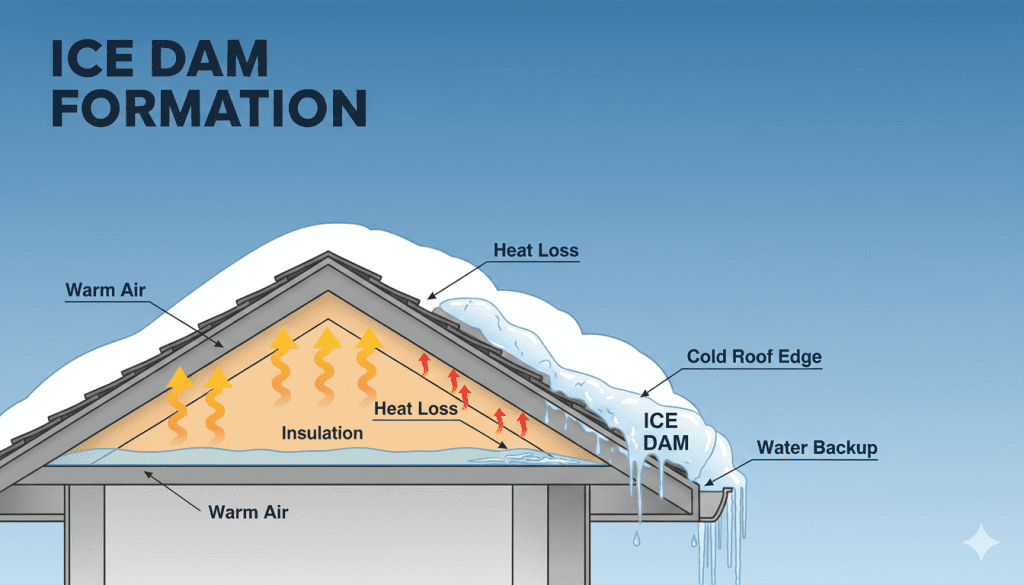
An ice dam is a buildup of solid ice that forms at the lower edge of a roof, typically near the eaves or gutters. When snow accumulates on the roof and the temperatures fluctuate, parts of the snow begin to melt. As the water flows down the roof, it encounters colder areas near the edge and refreezes, gradually creating a thick ridge of ice. Once that ice ridge is established, any additional melting snow gets trapped behind it, unable to drain properly. The water begins to pool, and because roofs are not designed to hold standing water, it eventually seeps under shingles and into the home.
This process can trigger a chain reaction of damage. Roof decking becomes soaked, insulation loses its effectiveness, and interior walls and ceilings may start showing brown stains or water streaks. Over time, persistent moisture can lead to mold growth, which creates health risks and often requires professional remediation.
How Ice Dams Form
Ice dams form due to temperature imbalances across the roof. Three major conditions must happen at the same time: snow on the roof, heat leaking from inside the home into the attic, and outdoor temperatures that remain below freezing.
Warm air naturally rises from the living spaces into the attic, usually through gaps around pipes, wiring, vents, and unsealed attic access points. If the attic is not properly insulated or ventilated, this warm air heats the underside of the roof. Snow sitting on the warmer areas of the roof begins to melt even when outside temperatures are below freezing. As the water flows down, it reaches the colder and unheated section of the roof near the eaves and gutters. Because this area stays below freezing, the water turns back into ice, gradually building the ice dam.
The more heat escapes into the attic, the faster this process happens. That is why homes with poor insulation, limited attic airflow, or uneven roof temperatures tend to experience recurring ice dams each winter.
Why Ice Dams Can Cause a Serious Problem
Ice dams don’t simply create an icy buildup on the outside of a home. The real threat lies in the water they trap. Roof shingles are designed to shed water that flows downward, not water that pushes upward or sits still. When water pools behind an ice dam, it can find its way under shingles, soak the roof decking, and drip into the home.
Some of the most common damage caused by ice dams includes:
- Interior water damage to ceilings, drywall, and paint
- Wet or compacted insulation that loses its thermal performance
- Warping or rotting of wood framing and roof structures
- Gutter damage due to the weight of the ice
- Mold and mildew growth inside walls, ceilings, or attic spaces
The longer an ice dam remains in place, the more likely it is to cause costly and widespread damage.
For a deeper look at what happens after an ice dam forms explore our detailed guide on how snow melt, refreezing, and temperature changes contribute to damage.
How U.S. Insurance Policies Handle Ice Dam Damage
Homeowners often assume that insurance will automatically cover ice dam damage, but this is not always the case.
Key points include:
- In the United States, homeowners insurance policies typically cover sudden and accidental damage.
- If melting water from an ice dam leaks into the home and damages ceilings, walls, or insulation, the interior water damage is often covered.
- However, the circumstances surrounding the damage matter and can affect the outcome of the claim.
- Insurance companies often evaluate whether the homeowner took reasonable steps to maintain the roof and attic.
- Claims may be denied if the insurer determines that long-term neglect, insufficient insulation, poor ventilation, or lack of proper maintenance contributed to the damage.
- In some cases, insurers will cover interior damage but exclude repairs to the roof itself, especially if the shingles were already aging or worn before the ice dam formed.
- Homeowners should review their policy for exclusions related to roof maintenance.
- Some policies require homeowners to perform regular roof upkeep or clear excessive snow when possible.
- Other policies may not cover the cost of removing the ice dam unless the removal is necessary to prevent further damage.
By reviewing your policy closely and understanding these conditions, you can better anticipate how your insurer may handle an ice dam claim.
When Insurance Typically Covers Ice Dam Damage
While coverage varies between insurance companies and individual policies, ice dam damage is generally covered when:
- The water intrusion happened suddenly and was not part of a long-term leak.
- The homeowner maintained the roof in reasonable condition.
- There is no evidence of neglect, deferred maintenance, or pre-existing damage.
- The ice dam occurred due to natural winter conditions beyond the homeowner’s control.
- Interior damage was a direct result of the ice dam.
Some insurance policies also cover additional living expenses if the homeowner must temporarily leave the home due to severe water damage.
How to Prevent Ice Dams
Homeowners can significantly reduce the risk of ice dams by improving the attic environment and maintaining their roofing system. The best prevention strategies include:
- Improving attic insulation. Adequate insulation keeps warm air inside the living areas instead of leaking into the attic.
- Installing proper attic ventilation. Good ventilation allows cold air to circulate through the attic, keeping roof temperatures stable.
- Sealing attic air leaks. Even small gaps around chimneys, pipes, exhaust fans, and access panels can allow warm air to escape into the attic.
- Cleaning and maintaining gutters. Clear gutters help water drain properly instead of freezing along the edges.
- Removing roof snow during heavy storms. Using a roof rake to clear the lower portion of the roof can prevent large snow accumulations that lead to melting and refreezing.
- Scheduling annual roof inspections. A professional roofer can identify potential issues such as poor insulation, ventilation problems, or roof damage that makes ice dams more likely.
When to Call a Professional
Homeowners should seek professional help if they notice icicles forming along the edge of the roof, large ice ridges developing, or water stains appearing inside the home. Attempting to chip away ice with tools can damage shingles or result in injuries, especially during slippery winter conditions.
NYTDR is a professional NYC home damage restoration company experienced in safely addressing ice dam issues. Our team uses proven, non-destructive methods such as steam-based ice removal, which effectively clears ice without harming the roofing system. When ice dams occur repeatedly each winter, Our experts can also assess the underlying causes, including insulation and ventilation issues, and coordinate solutions to help prevent future damage. Addressing the root problem early can protect your home from ongoing water intrusion and costly repairs year after year.
Conclusion
Ice dam damage can escalate quickly, turning a seasonal roofing issue into serious interior water damage and insurance complications. By understanding how ice dams form, recognizing early warning signs, and knowing what your homeowners insurance policy does and does not cover, you can take proactive steps to protect your home. Proper insulation, ventilation, and routine roof maintenance play a critical role in prevention, while timely professional intervention can limit damage when ice dams do occur.
When winter weather puts your home at risk, working with an experienced restoration company like NYTDR ensures the issue is addressed safely, thoroughly, and with long-term protection in mind.
For fast, professional help with home damage, contact NYTDR to schedule an inspection and restoration support.